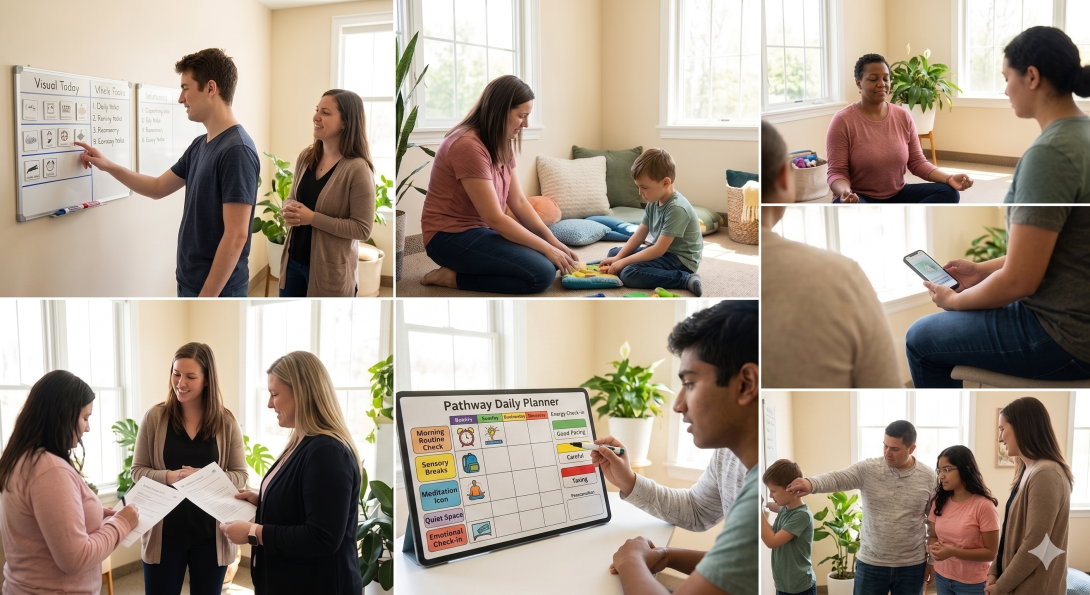
Not everyone with symptoms has ADHD or autism. That doesn't mean they don't need support. At CongniScience Clinics we provide a tailored clinician-led support service for individuals seeking support or clarity regardless of whether they have had or want an assessment. Our clinicians will work with you to help you make sense of your symptoms and challenges and support you with finding your way through these.
Our Neurodevelopmental Support Pathway is designed for people who want to better understand their patterns, reduce day-to-day friction, and identify realistic strategies that fit into real life.
You may already have a diagnosis of ADHD, autism, or another neurodevelopmental condition. You may have completed an assessment but not received a diagnosis. Or you may simply recognise neurodevelopmental patterns in yourself or your child and feel unsure where to start. This pathway is available with or without a diagnosis. It is clinician-led, and focused on practical next steps.
You may relate to this
Many people who access this pathway describe :
- feeling exhausted from trying to keep up
- understanding what needs to be done but struggling to start
- coping outwardly while feeling overwhelmed internally
- struggling with organisation, routines, or transitions
- feeling affected by sensory or social demands
- experiencing burnout or fluctuating energy levels
- receiving a diagnosis but still not knowing what actually helps
- completing an assessment but continuing to struggle day-to-day
- recognising neurodevelopmental patterns in themselves but feeling unsure where to start
- wanting practical support rather than another report
- Understanding how different patterns connect
Understanding how different patterns connect
Difficulties with attention, emotions, sensory processing, routines, communication, and energy do not happen in isolation.
For many people, these experiences overlap. A busy environment may increase sensory load. Sensory overload may make communication harder. Executive functioning difficulties may affect routines, which can then increase stress, fatigue, and emotional overwhelm.
Our approach looks at the whole-person picture. Rather than focusing on one difficulty in isolation, we work with you to understand how different patterns interact and what kinds of support may reduce pressure in everyday life.
Support is not one-size-fits-all. Different people need different types of understanding, strategies, adjustments, and support at different times.
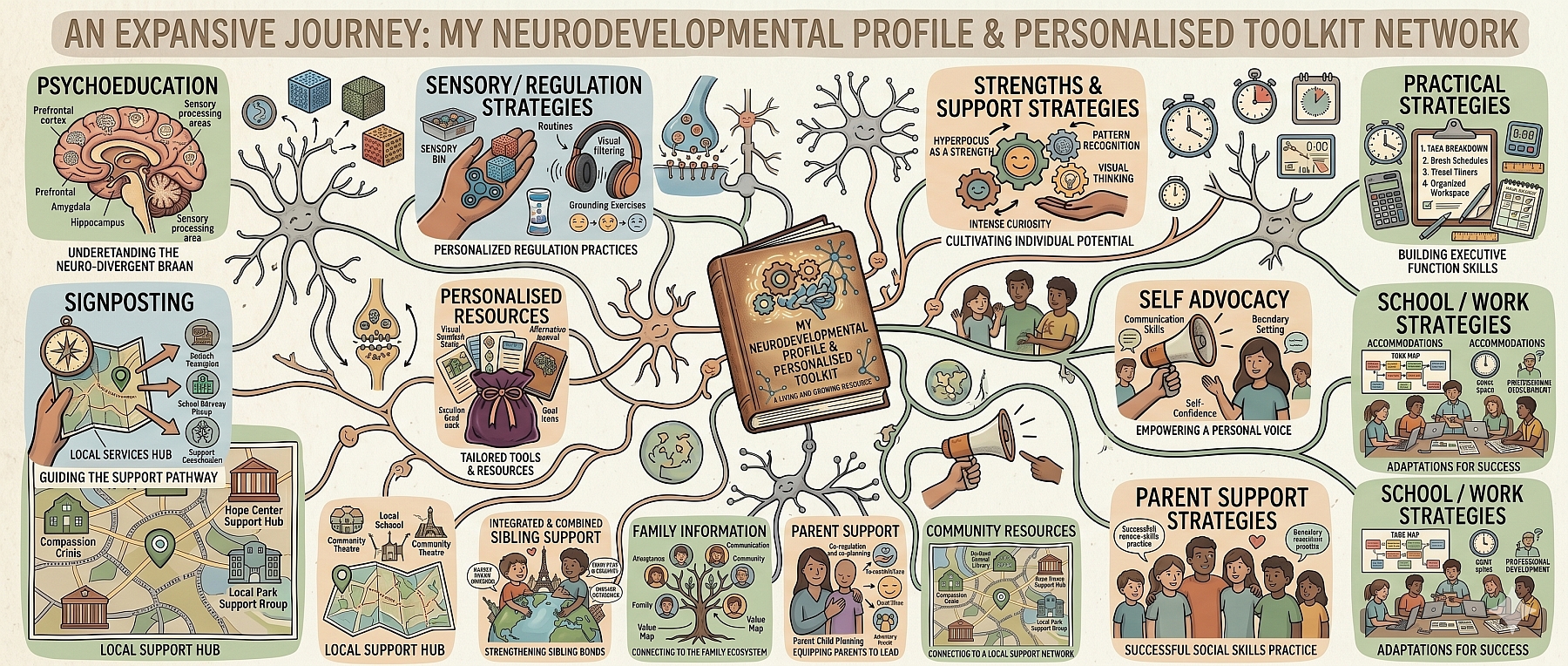
What kind of support is this?
It is NOT:
- counselling or psychotherapy
- crisis or emergency mental health support
- medication management or prescribing services
- generic or productivity-focused coaching
- a formal diagnostic or eligibility assessment
It IS:
- practical and formulation-focused
- clinician-led neurodevelopmental support
- personalised to your lived experiences
- focused on reducing day-to-day friction
- grounded in neuroaffirmative understanding
A Profile Review, where recommended, is not a formal diagnostic assessment and does not provide a diagnosis of ADHD, autism, or any other condition.
Your support journey
Everyone starts from a different place.
Some people already have a recent assessment, diagnostic report, or profile information and can move directly into support sessions. Others may benefit from a Profile Review first, so that support can be tailored more effectively.

Step 1: Initial Review
We begin by understanding your goals, current challenges, and any information you already have. This helps us consider the most appropriate starting point.

Step 2: Building understanding
Where helpful, we may complete a personalised Profile Review to identify the patterns most relevant to your experiences. For others, existing assessment information may be enough to guide support.

Step 3: Personalised support
You will work with a clinician across three structured support sessions. These sessions focus on your priorities, your everyday challenges, and the strategies most likely to be useful for you.

Step 4: Practical strategies and next steps
Together, we identify realistic adjustments, resources, and next steps that can be applied in daily life.
We will always recommend the least intensive clinically appropriate option based on your needs and the information already available.
Areas support may focus on
Support is tailored to each person, but common areas include:
- Executive functioning - Planning, organisation, task initiation, routines, prioritising, and managing everyday demands.
- Emotional regulation- Understanding overwhelm, shutdown, emotional intensity, recovery needs, and what helps you feel more regulated.
- Sensory processing - Exploring the impact of noise, busy environments, sensory load, and the need for recovery or adjustment.
- Energy and burnout - Looking at fatigue, masking fatigue, pacing, boom-and-bust cycles, and sustainable ways of managing energy.
- Predictability and routine - Supporting transitions, uncertainty, structure, expectations, and practical routines that reduce friction.
Communication and relationships - Understanding masking, misunderstandings, social effort, boundaries, and communication preferences.
What the sessions typically cover
The support package usually includes three structured sessions.
Session 1 – Understanding Your Profile
- making sense of patterns and experiences
- identifying current stressors and strengths
- understanding what costs the most effort
Session 2 – Practical Strategies & Adjustments
- routines and organisation systems
- sensory and emotional regulation strategies
- adapting recommendations into real life
Session 3 – Consolidation & Next Steps
- reviewing what is helping
- refining strategies
- planning sustainable next steps
Fees
We recognise that people come to us with different experiences and different levels of existing information. For this reason, not everyone needs the same pathway.
We aim to keep pricing clear and transparent. A clinician will recommend the least intensive clinically appropriate option based on your goals, needs, and any existing information.
Support Sessions Package — £395
For clients who already have suitable assessment or profile information.
This includes:
- Three support sessions
- Personalised application of recommendations
- Toolkit guidance
Profile Review and Support Package — £695
For clients who would benefit from additional profile mapping before support begins.
This includes:
- Questionnaires
- Profile review consultation
- Personalised Neurodevelopmental Profile
- Recommendations
- Toolkit resources
- Three support sessions
Additional sessions — £150 per session
Additional sessions can be arranged where clinically appropriate.
There is never any obligation to pursue additional services with us. We will explain the recommended pathway and associated costs clearly before any booking is confirmed.
Why people choose this pathway
People often choose this pathway because they want support that feels personalised rather than generic.
They may want to understand why everyday life feels so exhausting, turn recommendations into strategies they can actually use, or explore support without feeling pushed toward diagnosis.
The aim is to help you feel listened to, understood, and clearer about what may help in everyday life.
This pathway is NOT suitable for:
- urgent mental health or safety support
- crisis intervention or emergency services
- trauma-focused therapy or counselling
- prescribing or medication management
- acute or emergency clinical care
This pathway IS suitable for:
- practical neurodevelopmental support
- post-diagnostic understanding and guidance
- support following no-diagnosis outcomes
- people exploring ongoing daily difficulties
- those unsure whether assessment is needed
Frequently asked questions
Do I need a diagnosis?
No. The pathway is available to people with or without a diagnosis.
Is this suitable for children and young people?
Yes. We offer age-appropriate support for children, young people, and adults.
For children and younger adolescents, support is typically delivered with significant involvement from parents or carers. As young people become older and able to make more informed decisions about their care, we will tailor involvement and consent processes appropriately.
What happens if I already had an assessment elsewhere?
Many people come to us having already received an ADHD, autism, or combined assessment elsewhere. Where appropriate, we can use existing assessment information to help inform support and may not need to repeat work that has already been completed.
Our focus is not on repeating an assessment, but on understanding your current needs and identifying the practical support that is likely to be most helpful.
What if I had an assessment but did not receive a diagnosis?
Some people complete an assessment and do not receive a diagnosis but still experience significant day-to-day challenges. Support needs do not always disappear because diagnostic criteria were not met.
This pathway focuses on understanding your experiences, identifying patterns that may be contributing to difficulties, and exploring practical strategies and supports that may help improve day-to-day functioning.
Is this therapy?
No. This pathway is not counselling, psychotherapy, or traditional coaching. It is a clinician-led neurodevelopmental support service focused on understanding patterns, identifying practical strategies, and helping people apply recommendations in everyday life.
What happens during the support sessions?
Sessions are personalised but often focus on understanding patterns, reducing overwhelm, developing practical strategies, reviewing adjustments, and identifying realistic next steps.
How much will the pathway cost?
The cost depends on the most appropriate starting point for you. Some people already have suitable assessment or profile information and can move directly into support sessions. Others benefit from an additional Profile Review before support begins so that recommendations can be tailored more effectively.
During the Initial Review, a clinician will consider your goals, current needs, and any existing information you already have before recommending the least intensive clinically appropriate option.
We will always explain the recommended pathway and associated costs clearly before any booking is confirmed. No payment will be taken until this has been discussed and agreed with you.
Will I automatically need a Profile Review?
No.
If you already have suitable assessment or profile information, we may recommend moving directly into support sessions. The purpose of a Profile Review is to build understanding where additional information would genuinely help personalise support. It is not routinely required for everyone.
Will you tell me if assessment may be helpful?
If, during the course of support, a formal assessment appears relevant to your goals, we can discuss the available options. This may include NHS, Right to Choose, or independent assessment pathways. Any decision about further assessment remains entirely yours.
Unsure where to start?
We can help you consider whether a Support Pathway, Profile Review, or Full Assessment may be the most helpful next step for your goals.